
Fabric Spec Finder
Enter your minimum required specs and we'll find the right fabric for your project.
How to Read a Geotextile Spec — and Match It to a Fabric
When a plan set or engineer calls out a geotextile, it's rarely just “woven” or “nonwoven.” It's a list of numbers — grab tensile, AOS, permittivity, a class.
The Fabric Spec Finder matches those numbers to a product. This guide explains what each one means, so you can read a spec sheet and buy the right fabric with confidence.

Every geotextile is defined by a handful of test values, each measured by a standard ASTM method. Knowing what they describe tells you instantly whether a fabric fits your job. Here are the ones that show up on almost every spec.
How nonwovens are sized. Heavier usually means more strength and puncture resistance, but a bit less flow.
Pull resistance in pounds — how woven stabilization fabric is rated. Higher tensile carries heavier loads.
Survivability under sharp rock and rough installation — the difference between fabric that lasts and fabric that fails on day one.
Apparent Opening Size — the effective pore size. Controls which soil fines pass and which are held back. A higher sieve number means a smaller opening.
How fast water passes through, in sec⁻¹ or gpm/ft². Higher numbers mean more drainage capacity.
Percent of strength retained after sun exposure — the spec to watch any time the fabric stays exposed rather than buried.
Strength Specs — Woven's Strong Suit

When a spec leads with tensile strength, it's a strength job — separation under a base, stabilizing a soft subgrade, holding load. Grab tensile (ASTM D4632) is the headline number, often backed by wide-width tensile (D4595) for reinforcement, plus puncture and tear values for survivability. This is where woven stabilization fabric shines: a tight weave delivers high tensile strength and resists stretching, which is exactly what road base and parking-lot subgrades need. For those traffic-bearing builds there's also dedicated road fabric and paver base fabric. Match the required tensile and puncture values to the fabric's published numbers — not just the word “woven.”
Flow & Filtration Specs — Nonwoven's Strong Suit
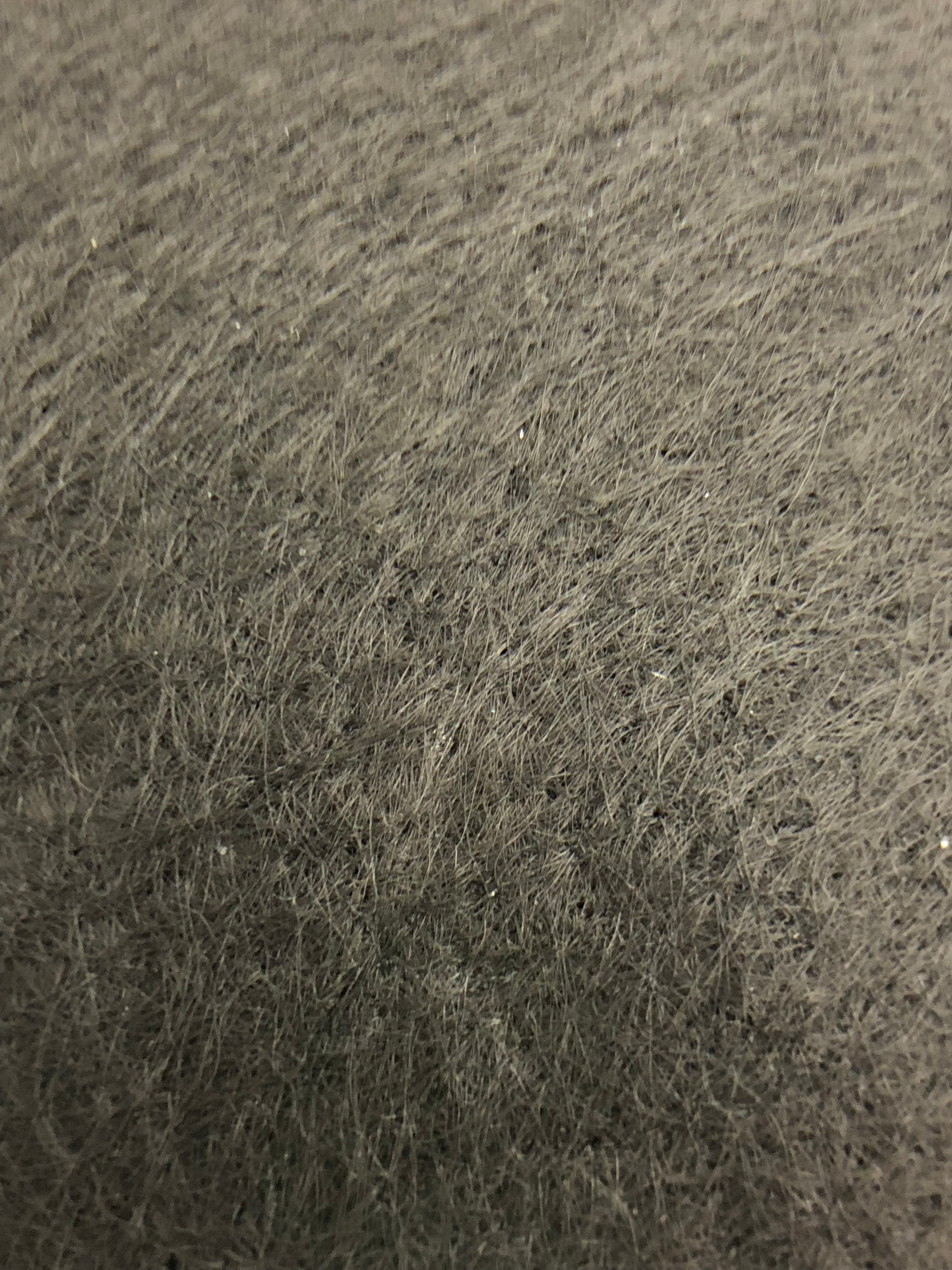
When a spec leads with AOS and permittivity, it's a water job — drainage, filtration, or separation where flow matters. AOS (ASTM D4751) tells you the effective pore size: small enough to hold back the soil fines you're trying to retain, open enough to let water through. Permittivity and flow rate (D4491) tell you how fast that water moves. This is nonwoven territory, sized by weight — see the drainage & filtration and french drain lines for flow-driven work, and the shoreline erosion control fabrics where a heavy nonwoven sits under riprap. Lighter weights flow faster; heavier weights filter finer and survive rougher handling.
AASHTO M288 & DOT Classes
On public and DOT work, geotextiles are usually called out by AASHTO M288 — the standard that state transportation departments built. It covers six applications: subsurface drainage, separation, stabilization, permanent erosion control, temporary silt fence, and paving fabric. M288 is a survivability spec, not a design guide: it sorts fabrics into strength classes (Class 1 the most robust down to Class 3), and each class can be satisfied by either a woven or a nonwoven option. Two things trip people up. First, most listed values are MARV — minimum average roll values — so your fabric needs to meet or beat them, while AOS is a maximum you must stay under. Second, “Class 2 nonwoven” isn't one product; it's any nonwoven whose published numbers clear the Class 2 requirements for that application. Match the class and the property values.
Match the Number, Not Just the Name
“Woven” and “nonwoven” are categories, not specifications. Two nonwovens can have very different AOS and flow, and two wovens very different tensile. Pull the required values off your plan or spec sheet — tensile, puncture, AOS, permittivity, class — and check each one against the fabric's published roll values before you order. That's the difference between a fabric that passes inspection and one that gets rejected on site.
Quick Spec-Matching Checklist
- 1. Don't stop at “woven” or “nonwoven” — that's a category, not a spec; match the actual values
- 2. Strength jobs (separation, stabilization, roads): check grab tensile (D4632), puncture, and tear — woven is rated by tensile
- 3. Water jobs (drainage, filtration): check AOS (D4751) for what it retains and permittivity/flow (D4491) for how fast it drains — nonwoven, sized by weight
- 4. Public/DOT work: match the AASHTO M288 application and class — values are MARV (minimums) while AOS is a maximum
- 5. Confirm every required value against the fabric's published spec sheet before you buy
Browse by what your spec needs: woven stabilization, road, and paver base fabrics on the strength side, and nonwoven geotextile, drainage & filtration, french drain, and shoreline erosion control on the flow side — or pick an exact weight from the nonwoven weight collections. Everything ships free.
Have a spec in hand? Use the Fabric Spec Finder above — enter the values your plan or engineer calls for, and it matches them to a fabric.


